
Quiet Down
The moment I’d been dreading had arrived. In the departure lounge at Narita a man was taking what seemed to be a long and not very important call at full volume, ignoring the grimaces of everyone within earshot, which was basically everyone in the lounge. It was jarring to say the least and made worse by the fact that I’d just spent three weeks in Japan, one of the loveliest and quietest countries I’ve ever had the pleasure to visit. I know you won’t be that guy, right?
Searching for Silence
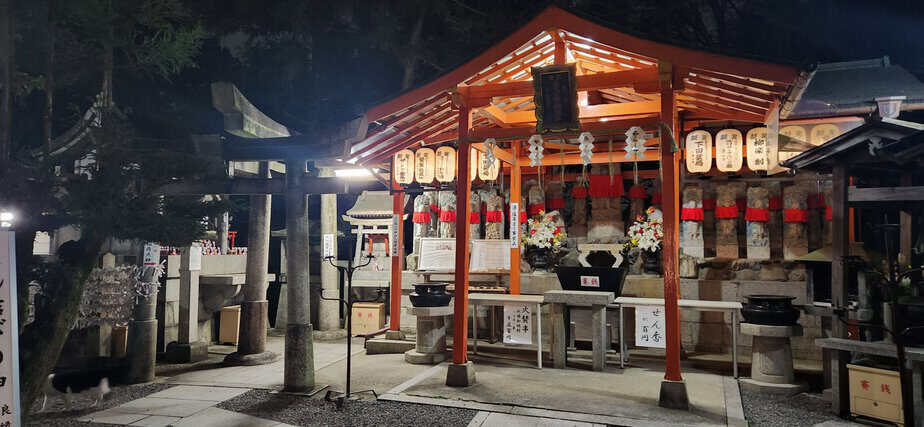
Searching for a quieter side of Japan might require a few changes to your travel style
It might seem strange to say that a city like Tokyo, for example, with a population of over 14 million tends to be quiet, but in general it seemed to me that the well-organized infrastructure and courteous nature of Japanese people lowers the city’s volume to a peaceful hum. During our entire recent visit my husband and I heard only one bleating car horn and believe me, it was jarring. I really thought a major accident was about to occur.
So, why would you need to search for a quieter side of Japan? In a word, people. There are a lot of us eager to see the country. In 2025, over 42.7 million international visitors came to Japan and the majority of them followed the Golden Route to Tokyo, Kyoto and Osaka with stops at Mt. Fuji and Nara.
Hear Me Out
As a first-time visitor I had read about the Japanese custom of not talking or listening at high volume on your phone while on public transportation, but I was surprised at how much this carries over to many public spaces. On the subway, on the bullet train, in secluded temples, gardens, and shrines, Japan is peaceful. But pop up above ground into a busy station or visit a must-see temple and you’ll find yourself in a sea of noise. Most of it is due to us, the tourists, rushing around at top volume to see as much as possible.
Here are a few tips for the introverts, the fatigued, and the noise-challenged among us. Some of these may apply on just about any trip, anywhere in our increasingly crowded world.
Be an Early Bird
Sometimes cliches ring true and the one about the early bird is certainly true in Japan. To avoid the crowds and tour buses try to book the earliest tour possible for the Imperial Palace or the Tsukiji Outer Market, Tokyo’s historic fish market. We booked with Guru Walks. Tours are free but a gratuity is expected for the guide.
Breakfast tip: Westerners who are used to a hearty breakfast and several cups of coffee will find most restaurants only open around ten or eleven in the morning, way too late for an early start. What to do? Hotel restaurants open early but can be pricey or have limited selections. Convenience stores with tasty options are everywhere and are usually open 24-hours.
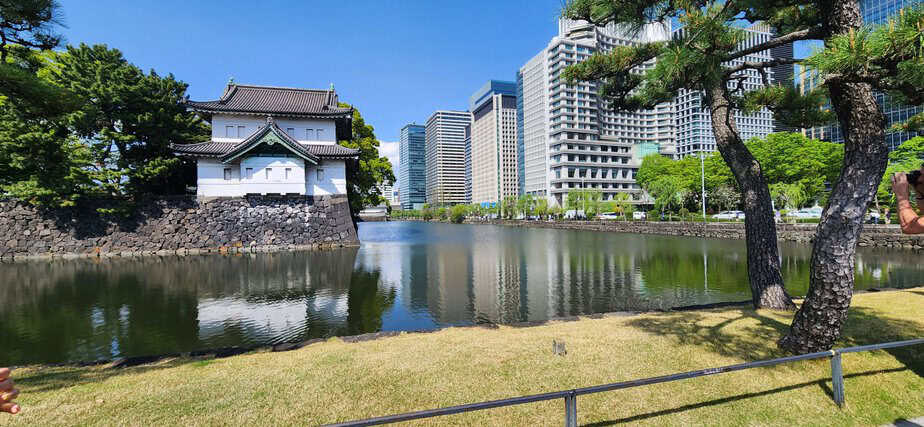
It was worth getting up early to get shots like this on the first tour of the day at the Imperial Palace
Or a Night Owl
Take advantage of your jet lag to stay up late. We enjoyed the sunset and had the glowing orange torii gates of Fushimi Inari-taisha almost all to ourselves in Kyoto. Timing is everything at ultra-popular sites like this Shinto shrine that dates to 711 CE and is dedicated to Inari, the God of Rice.
The shrine is open all day and night, and it’s free to enter, although a small donation at the entrance is appreciated. You literally cannot get there too early or stay too late.
A Word about Torii: Torii gates represent the border between the everyday and the world of the sacred and walking up the Senbon Torii (thousands of torii) trail at sunset was a meditative event I will never forget. This mountain shrine is also dedicated to business ventures, and more commonly, to wishes granted, so the largest torii gates you’ll see have been donated by companies, with their names discretely noted on the bottom of the columns. The 800 torii that line the Senbon trail have been donated in this way. But there are over 10,000 torii gates on the mountain, most of them miniature versions, and they’ve been placed on small rock altars lining the narrow trails that branch off from the main path. Each one is a small work of art and worth a respectful and quiet detour.
The temples at the base of the mountain and the path to the summit are gently illuminated at night and there is a good view of the city at the top. If you sleep in and find yourself on the crowded trail at midday, packed shoulder to shoulder with tour groups, keep climbing. Most people turn back at the halfway point.
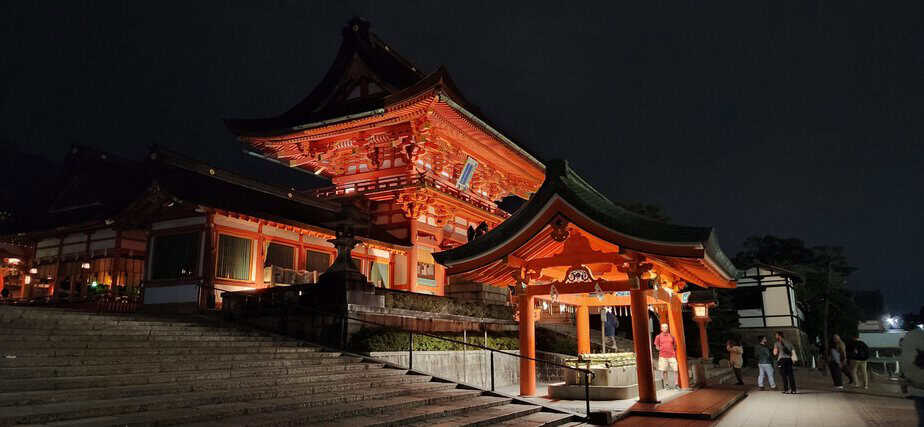
Fushimi Inari-Taisha is perhaps more beautiful at night, but it is definitely quieter
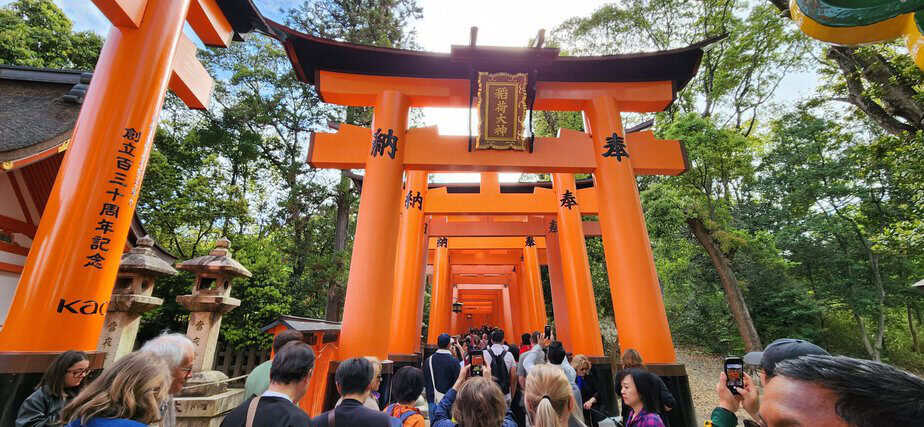
The start of the Senbon Torii at 8 am and it only gets more crowded during the day
Stay Away or Stay Awake, Your Choice
Although it may be tempting to stay right under the roaring Godzilla head in Shinjuku or near busy Tokyo station for a faster train connection, remember that Japan has incredibly efficient public transit and Uber. Staying in quieter areas like Yanaka with its traditional wooden houses, cat themed stores and cafes, and proximity to Ueno Park will give you a reprieve from the crowds.
We loved our stay in the quiet mixed residential and office area of Shibaura on Tokyo Bay. Fairmont Tokyo, the first Fairmont in Japan, has gone literally above and beyond with views of the Tokyo Tower and Tokyo Bay through window walls on the 35th to 43rd floors of Blue Front Shibaura Tower. You can read my full review in Luxe Beat Magazine.
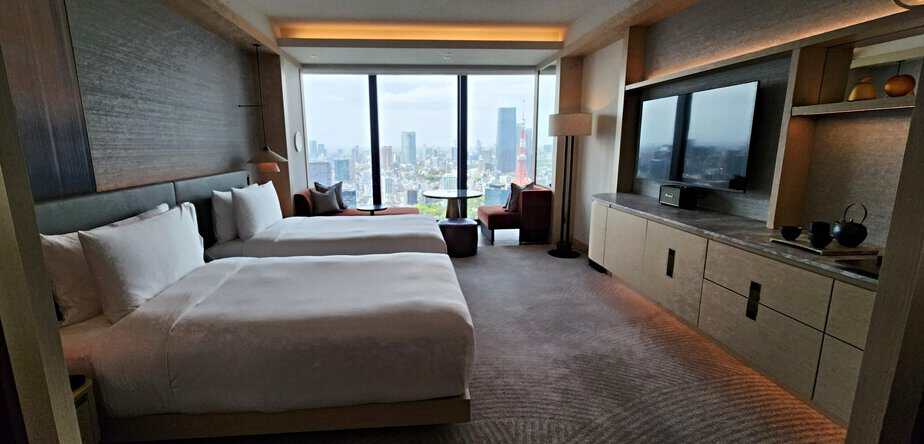
Fairmont Tokyo sits high above Tokyo for incredible views and a quiet night’s sleep
Rocketing to Hinode, the closest station to Fairmont Tokyo on the Yurikamome U-line monorail is so much fun. Try for a seat near the front of the train in the early afternoon when it’s less busy for a panoramic view of Tokyo. You can also find the Studio Ghibli Clock nearby and watch for free as life-size characters from Howl’s Moving Castle spring into action several times a day.
Right across the bay is the former site of the 2020 Summer Olympics with its long stretch of pristine beach. Only wading allowed, unfortunately. But, if you’re looking for the quietest Onitsuka Tiger store in Tokyo, you’ll find it at the Aqua City Odaiba mall. While the other stores are swamped with customers you’ll enjoy the lack of lineups and excellent sneaker service. Take the U-line to the Daiba station.
Peace in the Garden
There are two major religions in Japan Shinto and Buddhism. Even inner city Shinto shrines and Buddhist temples have quiet gardens where you can escape into beautiful surroundings although each style is distinct. Shinto is devoted to the spirits in nature so the gardens tend to be left in a natural state with many mature trees and walking paths. The Kameido Tenjin Shrine in Tokyo’s Koto ward with its water gardens and trailing wisteria is a lovely example.
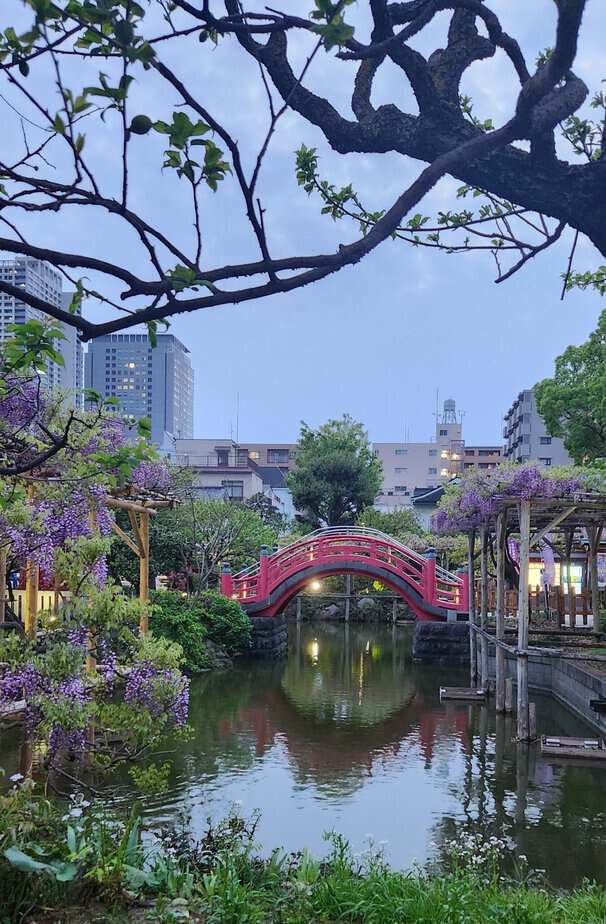
The subject of many classical artworks, the Kamedo Tenjin shrine was blissfully quiet at sunset
You’ll find more structures, like raked stone Zen gardens at Buddhist temples where they are meant to be a source of calm, contemplation and meditation. The Toji Temple in Kyoto, a UNESCO World Heritage site, has beautifully manicured gardens surrounding its famous five story pagoda. After all, where better to experience the benefits of being in nature than Japan, the country that brought Shinrin-yoku (forest bathing) to the world.
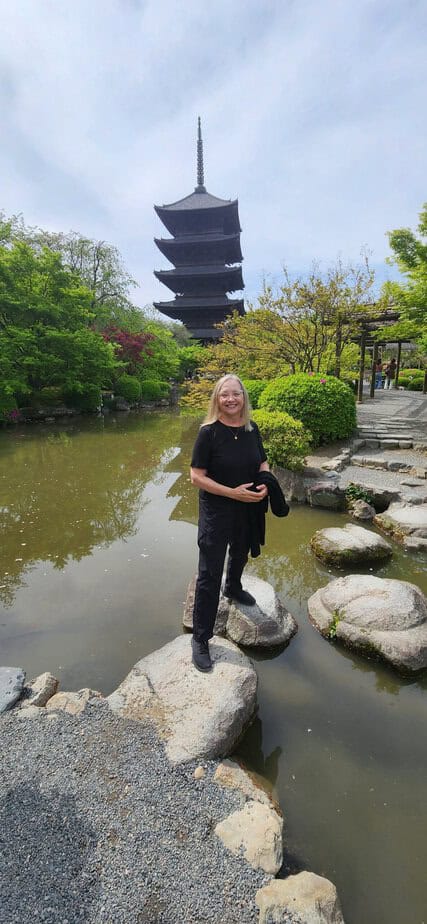
The classical garden at the Buddhist Toji Temple in Kyoto
Finally, if you’d like to experience a peaceful stroll through a bamboo garden in Kyoto you can get up well before sunrise and make your way to Arashiyama Bamboo Grove before the hordes arrive at 8 a.m. Or, you can take a short train and bus ride to for a truly peaceful and quiet, and incidentally educational walk through Kyoto’s OG bamboo forest at Rakkusai Bamboo Park. This rarely visited park holds an ecological garden with around 110 kinds of bamboo and can you learn about them at the blissfully uncrowded visitor center and museum before stepping out into the forest to hear the stands of bamboo tapping together in the breeze. Be sure to pick up a bamboo utensil or a pair of bamboo earrings to remember this quietest of places in Japan.
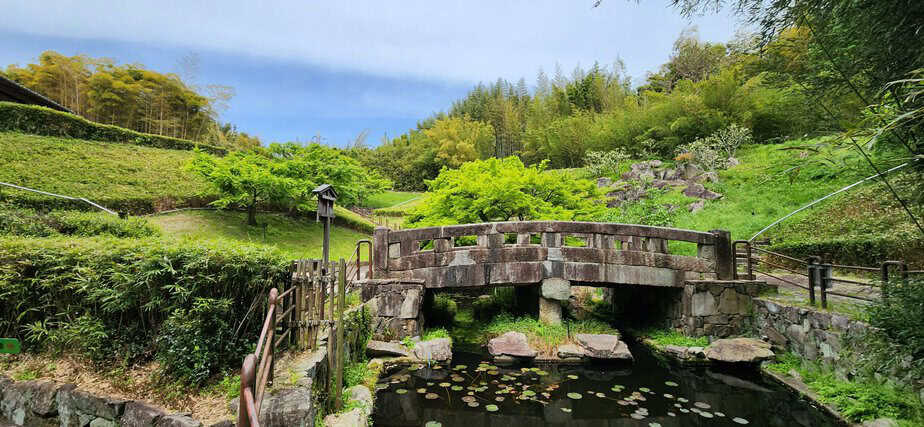
Enjoy a quieter walk in a bamboo forest at Rakusai Bamboo Park in Kyoto
This post contains some affiliate links to sites that I use when I travel. If you use them I may earn a small commission at no cost to you. However, this has no effect on the opinions on this website. Enjoy!