

Visit the Puca Festival in the tiny towns of Athboy and Trim in Ireland where locals gather to celebrate Samhain to the music of fiddles, drums and ancient horns.
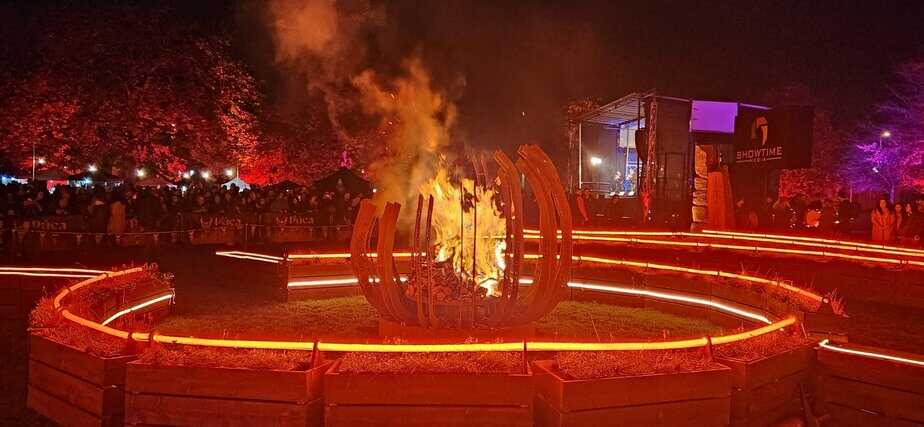
On a chilly night under the thin sliver of a waning moon I’m standing in front of a circular maze made of straw that’s anchored at each compass point with tall stone pillars. The shifting crowd around me scans the horizon for a line of flaming torches carried by runners who will light the Samhain fire. They are bringing the flame from a pyre that’s burning on the Hill of Ward at the site of the world’s first Hallowe’en celebrations.
Two Towns – One Festival
The towns of Trim and Athboy are nestled fifteen minutes apart in the Irish countryside about an hour’s drive from Dublin. The River Boyne runs through Trim and lends its name to the Boyne Valley, an area known as Ireland’s Ancient East. The valley holds secrets as old as time, like the mysterious prehistoric grave sites of Bru na Boinne, Loughcrew Cairns, and the Hill of Tara. Trim itself was settled in the 5th and 6th century, but it is perhaps best known for Trim Castle, a twenty-sided Norman castle built in 1175 and the filming location for Braveheart.
Athboy is just over a mile from The Hill of Ward, also known by its Celtic name of Tlachtga. Its origins as a sacred site where bonfires were lit and massive gatherings were held date back to the Bronze Age, but the October 31st festival was called Samhain by the Celts.
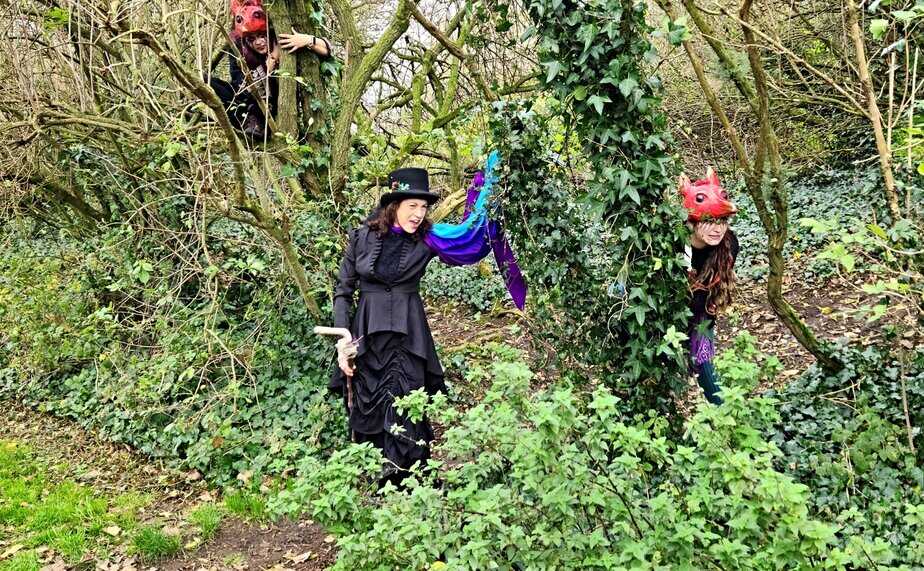
Samhain was a time to celebrate the start of winter, to commune with the ancestors and to honour them with feasts from a bountiful harvest. Dressing up in costumes was a good way to confuse any wicked fairies that might happen to drop in to the feast, a custom that inspired the mummers of Newfoundland. Athboy and Trim carry on these traditions at the Puca Festival, named after a shape-shifting trickster spirit who really can’t be trusted. Irish fairies are a bit more twisted than Tinker Bell and they’re treated with caution and respect.
Bring on the Clowns, Vikings, and Herbologists
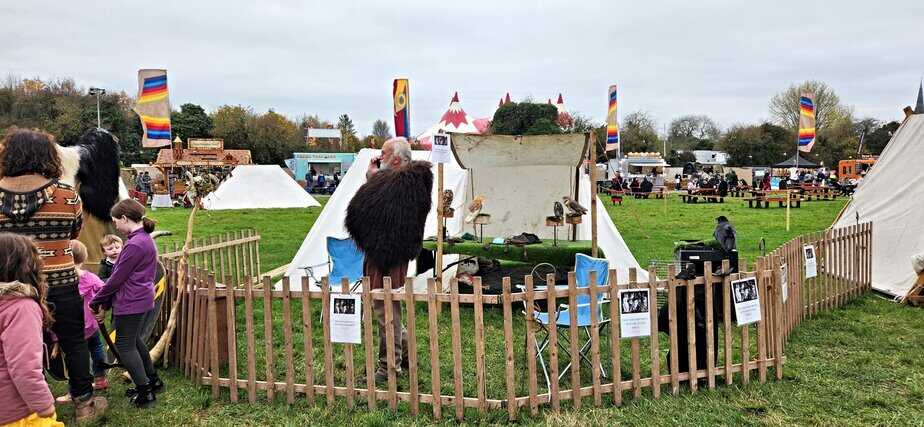
The four-day festival takes place at locations in both towns with activities for all ages from storytelling and morning meditations, to foraging, herbology and circus workshops. There are exhibitions of Norse bread making, axe throwing and falconry from the age of Vikings in the Historical Village. And it wouldn’t be an Irish festival without music. Irish rock legends and traditional performers appear on several stages throughout the festival.
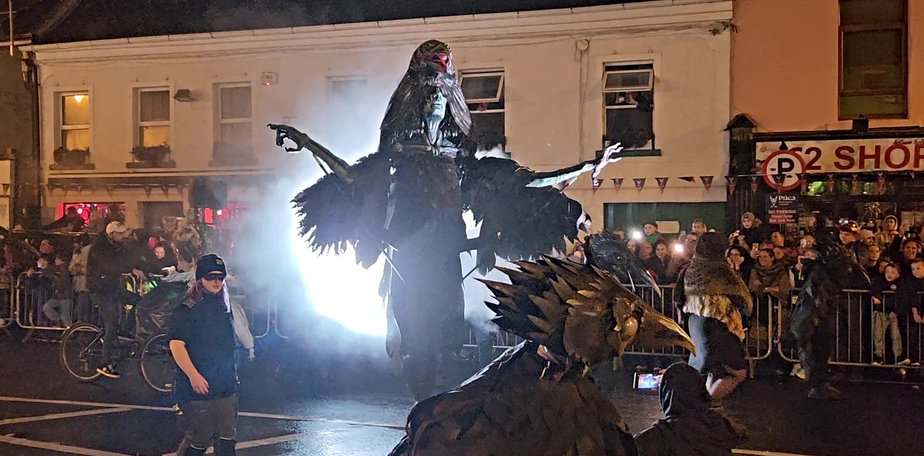
On Hallowe’en night a moonlight parade of towering sprits marches through the town of Trim. There are also not one, but two circus shows held under the big top, one suitable for children and one very much for the over 18 crowd.
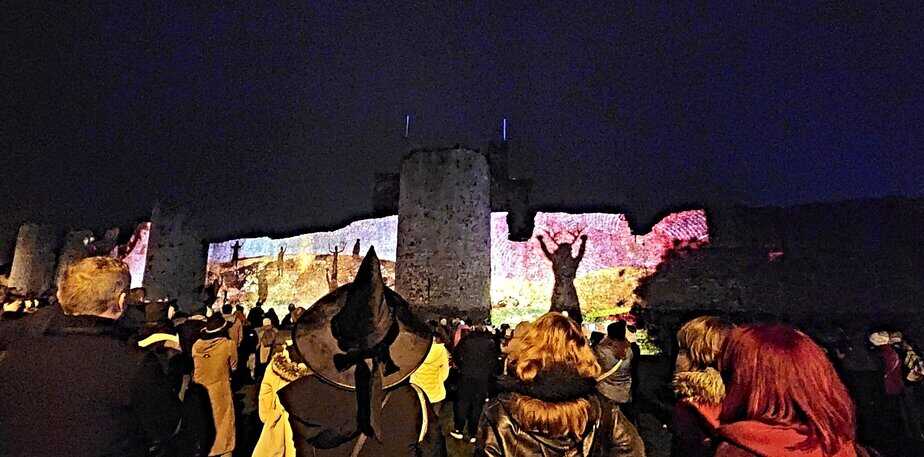
The walls of Trim Castle serve as a massive canvas for a spectacular illumination of bewitching tales every night. The craic, as the Irish call a good time, goes on from morning to well into the witching hours.
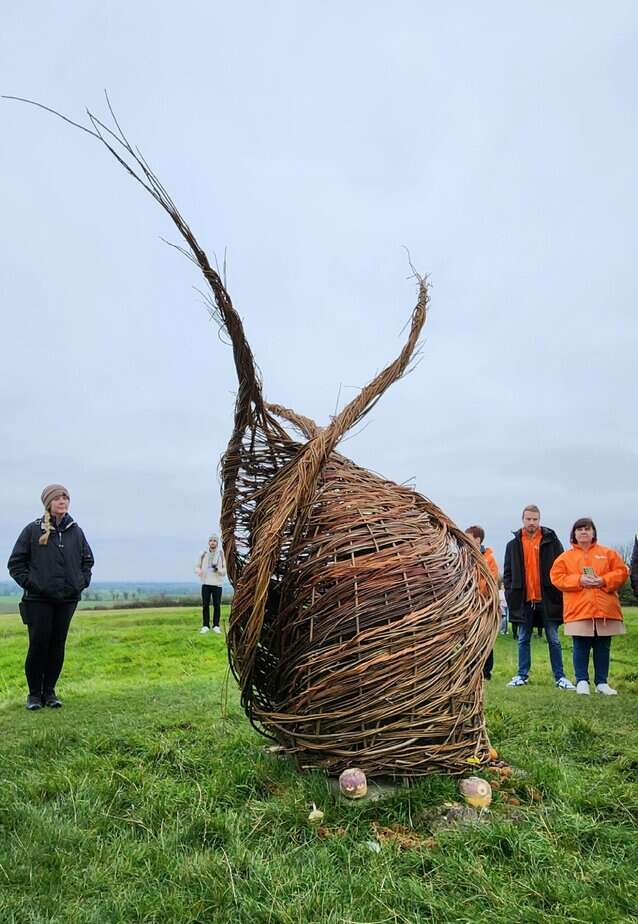
Sacred Ground: the Original Hallowe’en in Ireland
But to get a sense of how Hallowe’en was celebrated 9,000 years ago, long before a Spirit of Hallowe’en store appeared in every mall, you must head to the Hill of Ward. We met with a local expert historian for a tour around the site.
She told us that The Hill of Ward is the modern name of this gathering place which was originally named after the Druid goddess Tlachtga. The semi-circular site is made up of a series of banks and barrows, or ditches, that rise up to form a grassy hilltop with a panoramic view of the surrounding hills and fields. Here is the place where Hallowe’en traditions were born.
It was on this hilltop, according to Geoffre Keating, a 17th century Irish historian, that “the Fire of Tlachtgha was instituted, at which it was their custom to assemble on the eve of Samhain to offer sacrifice to all the gods…it was of obligation under penalty of fine to quench the fires of Ireland on that night, and the men of Ireland were forbidden to kindle fires except from that fire.”
On the winter solstice the entrances to Newgrange and other Neolithic passage tombs are aligned so that the first rays of sunrise shine into their deepest recesses, perhaps to share some light with the ancestors on the darkest of nights.
Light My Fire – Please!
One can clearly imagine the importance of the runners who brought the fire back from Tlachtgha to rekindle the fires for people waiting patiently in the dark. Samhain was one of the most important of the eight festivals celebrated here during the Wheel of the Year.
To stand on the hill where Samhain ceremonies have taken place since the Bronze Age was a thrilling experience. The very fact of standing in a place so old, knowing that generations had been there before, felt like a ghostly invitation to join an ancient dance. We were encouraged to leave a small gift, or a note with our intentions for the new year, on the hill with the spirits.
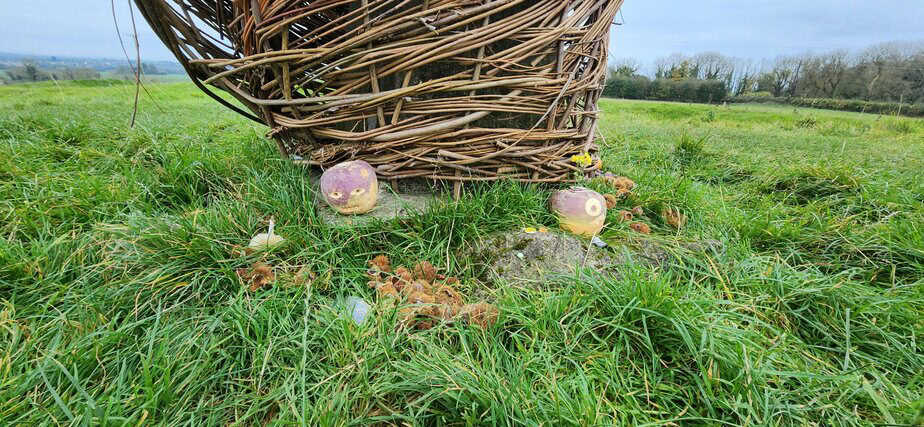
As I knelt down to leave a coin, I noticed that the pyre was surrounded by turnips with faces carved into them, as well as a Jack o’Lantern. The turnips were truly scary. They looked more like shrunken heads than the friendly carved pumpkin with its toothy grin, but here they were, the original source of the orange lanterns on our doorsteps back home.
Full Flaming Circle
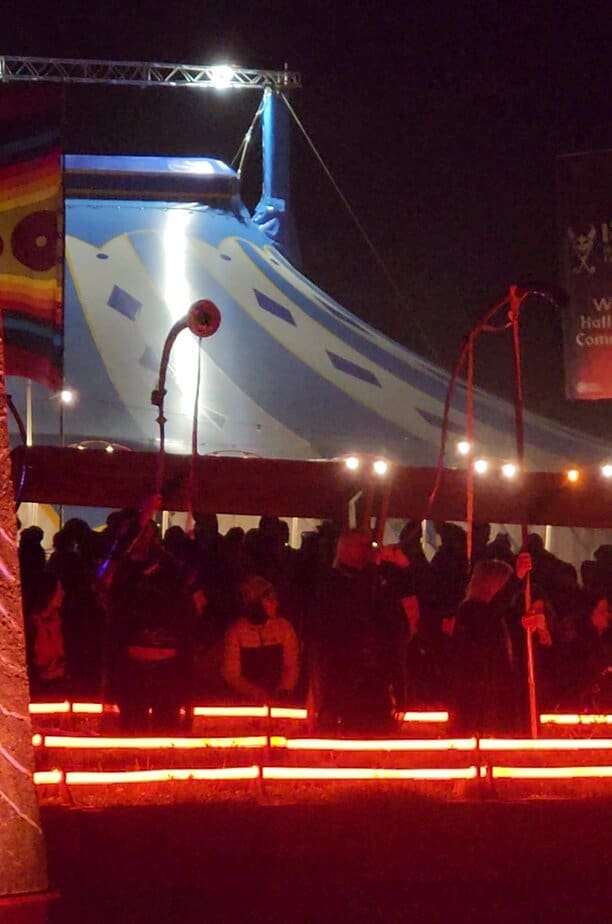
Back at the lighting of the Samhain fires at the Fair Green in Athboy, I had a greater appreciation for the ceremony that was about to unfold. The wail of ancient bronze age horns called dords, accompanied by the beat of the bodhran, a goat skin drum, heralded the arrival of tall illuminated spirits and as they lunged through the maze the crowd grew still.
Finally the first beacon of light appeared. The runners had arrived. They quickly lit the tops of the stone pillars and the bonfire in the centre of the maze, sending paper wishes flickering into the night sky. The musicians on the nearby stage began to play as the crowd cheered, paid their respects to Puca, and moved on into the night to enjoy more of the Puca Festival.
For all the details visit the Puca Festival website


